
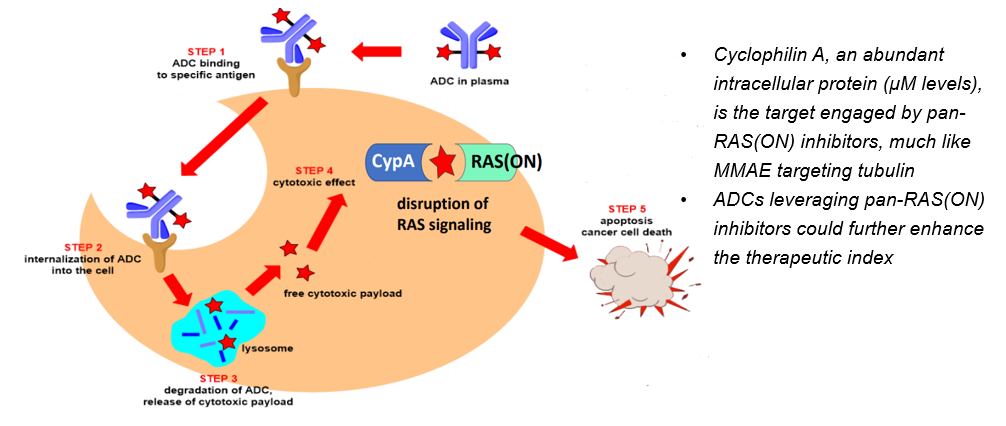
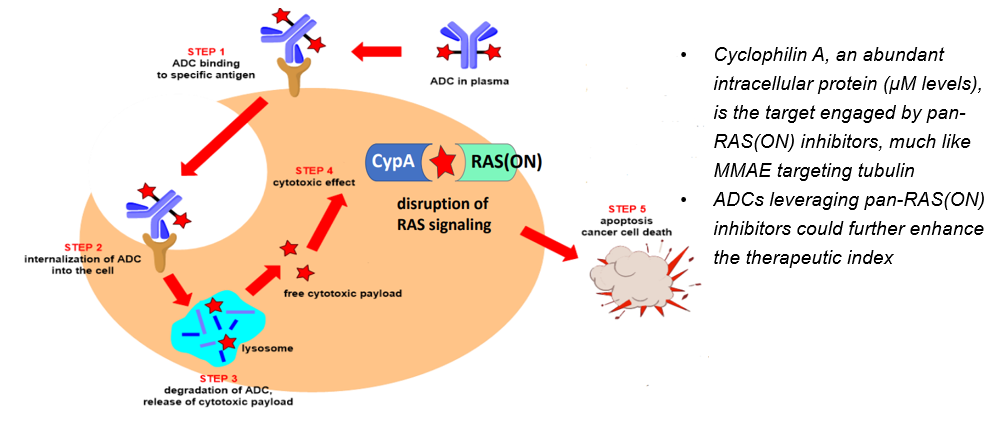
Hypothesis: Targeted delivery of a pan-RAS(ON) inhibitor in the form of ADC could widen its therapeutic index and enable rational combinations
• Addressing the limitations of small molecule pan-RAS(ON) inhibitors
– Tolerability issues: While shown to be safe, RMC-6236 has tolerability issues at the RP2D (300 mg QD for PDAC & 200 mg QD for NSCLC). Escalation beyond the MTD to further improve efficacy is not tolerable
– Combination challenges: Combination therapy with an EGFR monoclonal antibody in colorectal cancer (CRC) may be limited by overlapping dermatologic toxicity. In addition, combining with standard-of-care (SOC) chemotherapy may present tolerability challenges
• Adlai Nortye is positioned to develop first-in-class RASi ADC with transformational potential
– The picomolar to sub-nanomolar potency of our internal library of pan-RAS(ON) inhibitors, together with the high intracellular abundance of cyclophilin A, supports their potential as ideal ADC payloads for both RAS-mutant and selected RAS wild-type tumors
– Strong IP position for Linker-Payload
– Existing expertise accumulated from novel ADC payload programs, as well as significant translational/clinical experience in ADC development
AN4035 is the 1st drug candidate to demonstrate Proof-of-Concept of the RASiCATM platform by showing compelling preclinical efficacy and tolerability in CEACAM5-expressing RAS mutant tumors as monotherapy or in combination. The Company received HREC approval in Australia in July 2026, and is on track to dose the first patient in the second half of 2026, with initial clinical data expected to be available in the second half of 2027.


